
Myrtha Pools Celebrates 200 World Records
On 10 October 2026, at the Olympic City Aquatic Centre in Tashkent, Egor Kornev touched the wall in 21.28 seconds to set a new world record in the men's 50m butterfly at the World Aquatics Swimming World Cup. It was the 200th world record set in a Myrtha pool.
“The ongoing Swimming World Cup has shown the world what is possible when the world’s best swimmers compete in world-class pools, with World and Continental records falling across Baku and Tashkent.” — Brent Nowicki, World Aquatics CEO.
For Myrtha Pools, the milestone holds a special significance:
“Two hundred world records is not a number we set out to reach. It is the result of athletes who trust the water they race in, and of thirty years of working with World Aquatics to make the best pools for the best swimmers.” — Roberto Colletto, Myrtha Pools CEO.

The significance of this milestone becomes even clearer when looking back at the history.
The first world record set in a Myrtha pool came on 1 June 1995, at the aquatic centre in Canet-en-Roussillon, France, when Russia’s Denys Pankratov set a new mark in the 200m butterfly. A stroke of fate, perhaps: another Russian swimmer, competing in the same stroke, has now set the 200th.
In competitive swimming, Myrtha is often associated with temporary pools installed for major events. Yet the record books tell a different story: more than 40% of the 200 world records were set in permanent Myrtha pools, including the first and the 200th.
Myrtha's exclusive modular technology has also enabled organisers of major sporting events – from World Aquatics Championships and the Olympic Games to the US Trials and European Aquatics Championships – to bring swimming to large audiences by installing competition pools in major arenas. Myrtha has built pools in football and American football stadiums, including the Prater Stadium in Vienna and Lucas Oil Stadium in Indianapolis. Its installations have also featured in some of the world's largest indoor venues, from Mandalay Bay in Las Vegas to Paris La Défense Arena, as well as the Aspire Dome in Doha, designed by architect Roger Taillibert. Perhaps the most unusual installation was the one built on Copacabana Beach in Rio de Janeiro for the 1995 World Short Course Championships.
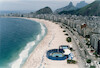
These temporary pools are subsequently dismantled and permanently reinstalled in community aquatic centres, creating a lasting legacy for local communities and young athletes beyond the major sporting events.
Whether temporary or permanent, Myrtha pools offer the same reliability and water circulation conditions that have enabled athletes from every continent to set 200 world records.
World records have been set in Myrtha pools in 20 countries across four continents. Australia leads with 28, thanks both to the many competitions it hosts and the outstanding performances of its national swimming team. The United States follows with 27 and Canada with 24.

A total of 122 world records were set in Myrtha pools built for World Aquatics competitions, reflecting the strong partnership between the Italian company and the world's leading swimming organisation.
“Through this Silk Road Tour, World Aquatics and its partners have helped inspire future champions and we look forward to seeing how these facilities continue to serve growing swimming communities for years to come. Myrtha has been a trusted partner to World Aquatics for many years and their expertise matters for the growth of our sport. Together, we are strengthening the future of aquatic sports and we are delighted to celebrate this latest milestone in our successful partnership.” — Brent Nowicki, World Aquatics CEO.
Photo credits first picture: @kamilla.khasanova.sport / Uzbekistan Aquatics


